
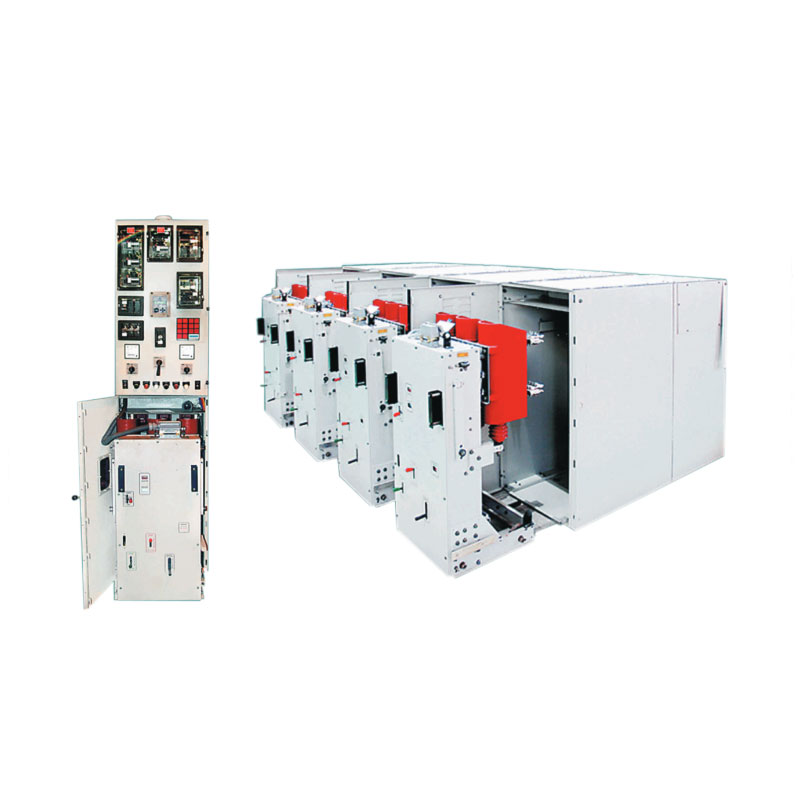
Keeping the power on is only half the job of electrical equipment. It also has to protect people, prevent damage, and keep working reliably for years. For industrial facilities, commercial buildings and substations, choosing reliable VCB panel manufacturers can make a difference to operating costs, electrical safety and maintenance requirements over time.
Vacuum circuit breakers (VCBs) are a common choice in medium-voltage power distribution. They clear fault currents efficiently and need relatively little routine upkeep. Because the interrupter is sealed, they also avoid the oil and certain insulating gases that other breaker technologies depend on.
If you're comparing VCB options, it's worth weighing sustainability alongside electrical ratings, safety features and price. A well-designed breaker can mean less maintenance, fewer replacement parts and dependable operation throughout its service life.
What Is a Vacuum Circuit Breaker?
A vacuum circuit breaker is a switching device that cuts off current when a fault occurs, or whenever a circuit needs to be disconnected. Inside it sits a sealed vacuum interrupter, which is what puts out the electrical arc that forms when the contacts pull apart.
Here's how it plays out. A fault develops and the breaker opens its contacts. A brief arc forms between them, but in a vacuum it dies out almost immediately. After that, the contacts provide the isolation the breaker was designed for.
You'll find VCBs throughout medium-voltage systems: industrial power networks, substations, commercial infrastructure and utility distribution equipment.
The breaker is only one piece of a complete panel, though. A panel can also include protective relays, current transformers, busbars, control circuits and mechanical interlocks. Together, they spot abnormal conditions and isolate the affected section of the network.
5 Reasons Vacuum Circuit Breakers Are Considered a Sustainable Choice
Sustainability in electrical equipment goes well beyond the materials used to build it. Reliability, maintenance demands, service life and what happens at end of life all count too. VCBs have practical advantages in each of these areas.
1. Less Dependence on Oil and Insulating Gas
The biggest environmental point in favour of vacuum switching is simple: the arc is extinguished inside a sealed vacuum interrupter, so the interruption process needs no insulating oil and no sulphur hexafluoride (SF₆) gas.
That matters because SF₆ is a potent greenhouse gas, and releasing it into the atmosphere has a serious climate impact. Where a suitable vacuum breaker is available, choosing one helps you sidestep the risk of SF₆ leakage altogether.
One caution, though. Not every vacuum circuit breaker is gas-free in every part of its construction. Look at the insulation medium used in the whole switchgear assembly, not just the interrupter.
2. Less Routine Maintenance
Maintenance eats up time, labour and replacement materials, so equipment that needs fewer routine visits lightens that load over its working life.
A vacuum interrupter is a sealed unit. There's no arc-quenching liquid or gas to top up, and depending on the model and how hard it works, that can make upkeep simpler than with some other breaker designs.
That said, "low maintenance" isn't "no maintenance." The operating mechanism, electrical connections, protection relays and other panel components still need inspecting according to the manufacturer's instructions. The inspection schedule also depends on how often the breaker operates and whether it has interrupted a fault.
For facilities with several electrical feeders, fewer unnecessary interventions also make routine upkeep much easier to schedule.
3. Longer Service Life and Fewer Replacements
Replacing electrical equipment is rarely just a matter of buying a new unit. You may need transport, installation, testing, downtime and disposal of the old equipment, and all of that adds up.
VCBs are built for repeated switching operations. How long one lasts depends on the model, the duty it sees and how well it's maintained, but the contact design and arc-extinguishing characteristics help limit wear in normal operation.
Fewer early replacements mean less material consumed and less waste produced. For facilities where equipment runs for many years, that's a practical sustainability benefit. Actual service life depends on operating conditions, switching frequency and fault interruptions, so check the manufacturer's mechanical and electrical endurance ratings before comparing models.
4. Better Electrical Safety
A sustainable electrical system also has to protect the people who run and maintain it. A serious fault can wreck switchgear, halt production and put workers in danger.
VCBs are designed to interrupt fault currents within their rated capabilities. Indoor metal-clad panels may include segregated compartments, safety shutters and mechanical interlocks to reduce the risk of accidental contact with live parts.
For example, Yamuna Power's VCBI-04 design includes a built-in safety shutter, mechanical interlocking and separate compartments for the breaker, busbar, CT/cable and instrument sections. These features help control access to internal components during operation and maintenance.
Even so, a breaker can't make up for a poorly designed or badly maintained system. Protection relays, earthing arrangements, correct installation and regular testing all remain essential.
5. Lower Maintenance-Related Operating Costs
The purchase price is just one slice of what electrical equipment costs. Maintenance labour, spare parts, service visits and unplanned stoppages can add up to a lot more over the years.
Because the sealed interrupter needs little routine attention, VCBs can trim some of those recurring costs. How much you actually save depends on the installation, how often the breaker operates, its fault history and your maintenance practices.
A fair comparison should look at expected service life, the cost of scheduled maintenance, spare-part availability and what unplanned downtime would cost you. And if you have several panels across a site, even a small cut in avoidable maintenance is worth having.
Where Are Vacuum Circuit Breakers Used?
VCBs suit a wide range of medium-voltage applications. The right design depends on voltage level, current rating, fault level and the environment. Common uses include:
- Industrial plants: protecting distribution systems that feed production equipment, motors and auxiliary loads.
- Electrical substations: switching and protecting medium-voltage feeders.
- Commercial buildings: managing power distribution in large buildings with heavy electrical loads.
- Infrastructure projects: supporting distribution networks for transport facilities and other essential services.
- Utility networks: isolating faults and allowing controlled switching across distribution systems.
Indoor and outdoor installations call for different designs. An indoor metal-clad VCB panel is generally meant for a switchgear room, while an outdoor porcelain-clad breaker is built for suitable external conditions.
Whatever you choose, the equipment has to match the real operating environment, not just the nominal voltage.
How to Choose the Right VCB Panel Manufacturers
Picking a supplier takes more than lining up quotations. The panel has to meet your installation's electrical requirements and properly protect the people working around it.
Check the Electrical Ratings
Start with rated voltage, continuous current, short-circuit breaking capacity and short-time withstand rating. These need to fit your network's design and the fault levels your electrical engineer has calculated.
As an example, Yamuna Power's 12 kV metal-clad indoor VCB, model VCBI-04, lists a maximum feeder and busbar current of 2,000 A and a rated short-circuit breaking current of 25 kA. Those figures belong to that model. They don't apply to every VCB panel.
Review Testing and Standards
Ask for the relevant type-test reports and confirm that the breaker and complete switchgear assembly meet the standards applicable to the installation. Yamuna Power lists CPRI type testing for its 12 kV VCBI-04 against IEC 62271-100:2008, IEC 62271-200:2008 and IEC 60694:2008. Check the available test documentation and applicable current requirements for the exact model you're considering.
Examine the Panel's Safety Design
Look for suitable mechanical interlocks, segregated internal compartments, shutters where they apply and a clear operating procedure. The design should also leave sensible access for inspection and maintenance.
For outdoor equipment, think about enclosure protection, weather exposure, insulation requirements and the installation environment.
Consider Service and Spare-Part Support
A dependable supplier should be able to explain installation requirements, commissioning procedures, maintenance intervals and how easy it is to get replacement components.
Ask what technical support you'll get after delivery. It matters even more when the equipment is part of a critical power distribution system.
Compare Total Cost of Ownership
The cheapest quote isn't always the best value over the equipment's life. Set the purchase price against expected maintenance, replacement needs, service support and the likely cost of downtime.
Looking at it this way gives procurement teams a clearer picture of both the financial and the environmental implications.
Why Work With Experienced VCB Suppliers?
Experienced VCB suppliers can help you find a breaker configuration that suits your operating conditions. They should be able to explain how indoor and outdoor designs differ, clarify electrical ratings and provide the relevant technical documentation.
Yamuna Power & Infrastructure Ltd. offers a 12 kV metal-clad indoor vacuum circuit breaker and outdoor porcelain-clad models rated up to 36 kV, with published outdoor ratings of up to 1,600 A and 25 kA. The indoor VCBI-04 has separate compartments and built-in interlocking features, while the outdoor range includes hermetically sealed poles and an IP55 protection rating. The appropriate model depends on the system ratings and installation conditions.
With any manufacturer or supplier, confirm the exact model, rated capacity, test documentation, delivery scope and after-sales arrangements before placing an order. These checks help ensure the equipment suits your project rather than simply matching a general product description.
Are Vacuum Circuit Breakers the Right Choice for Every Project?
Not always. Vacuum technology is a strong option for many medium-voltage applications, but the final call depends on your network and the duty involved.
Voltage class, transient recovery voltage, switching frequency, load characteristics and whether you'll be switching inductive or capacitive loads all need thought. Some applications need specific breaker designs or extra measures to control switching transients.
The environmental picture is wider too. It takes in manufacturing, transportation, operating life and end-of-life management, so you can't judge a product's sustainability from its switching technology alone.
Electrical engineers and procurement teams should look at the complete installation before deciding which breaker technology gives the best balance of safety, performance, cost and environmental impact.
Making a More Sustainable Choice for Electrical Safety
Vacuum circuit breakers pair reliable fault interruption with fairly low maintenance needs, which makes them a practical pick for many medium-voltage installations. And because they can interrupt current without oil or SF₆, they bring an environmental benefit in suitable applications too.
If you're comparing VCB panel manufacturers, base your decision on verified ratings, testing documentation, safety provisions and the expected cost of ownership. Equipment that fits your electrical system properly is what pays off over time. A well-matched VCB panel supports safer operations, cuts avoidable maintenance and helps keep your power distribution network dependable.
