
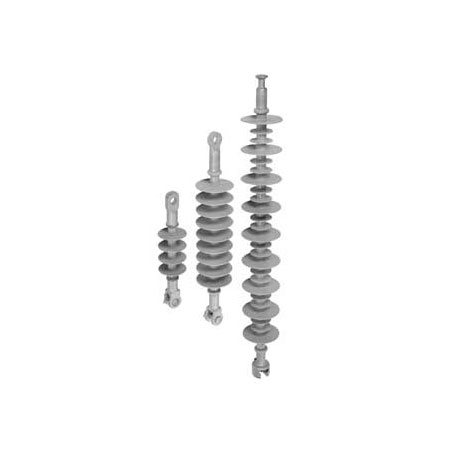
Electricity may travel across miles of overhead lines, but the conductors cannot simply be connected to the structures that support them. They need reliable electrical separation from poles, towers, and other grounded components, even in rain, dust, heat, and pollution. That is where a polymer insulator plays its part.
Composite insulators use a different construction from traditional porcelain and glass designs. They combine a strong internal core with a polymeric outer housing, giving them a lighter construction without compromising the mechanical support needed in power networks. Their surface properties can also be useful in areas where moisture, salt, and pollution are part of everyday operating conditions.
Yamuna Power & Infrastructure Ltd manufactures composite polymer insulators for applications from 11 kV to 400 kV, with configurations suited to different electrical and mechanical requirements. The choice of an insulator, though, cannot be based on voltage alone. Factors such as mechanical load, creepage distance, pollution levels, installation conditions, and the surrounding environment also need to be considered.
What Is a Polymer Insulator?
A polymer insulator is an electrical insulation component designed to support conductors while electrically separating them from grounded structures. It is also commonly called a polymeric insulator, composite insulator, or non-ceramic insulator.
A typical composite design has three main parts:
- A strong fibreglass-reinforced polymer core
- A polymeric housing with weather sheds
- Metal end fittings for mechanical connection
The core provides much of the mechanical strength, while the outer housing provides electrical insulation and protection against environmental exposure. Silicone rubber is commonly used for the outer housing because its hydrophobic surface can help the insulator perform under wet and contaminated outdoor conditions.
How Does a Polymeric Insulator Work?
Its job is fairly simple to understand. The insulator keeps an energized conductor separated from the supporting structure while also handling the mechanical forces placed on the line.
The outer sheds are particularly important. Their shape increases the creepage distance, which is the distance electricity would have to travel along the surface of the insulator. This becomes especially relevant in areas where dust, industrial pollution, salt, or moisture can accumulate.
Silicone rubber also has hydrophobic properties. Water tends to form droplets rather than spreading into a continuous film across the surface. This can help limit leakage current under wet and contaminated conditions.
That does not mean a polymeric insulator is unaffected by pollution. Proper design, material selection, creepage distance, and testing still matter.
What Are Polymer Insulators Made Of?
The exact construction varies by product and application, but composite polymer insulators generally combine a structural core with an insulating outer housing.
The core is commonly made from fibre-reinforced polymer, which provides the mechanical strength needed for suspension, tension, or other applications. The outer housing may use silicone rubber, EPDM, or other polymeric materials selected according to the required electrical and environmental performance.
Metal fittings are attached to the ends so the insulator can be connected to the relevant line hardware.
Each material serves a specific purpose. The composite design allows the core, housing, and fittings to work together rather than relying on one material to provide every required property.
Key Benefits of Polymer Insulators
Polymeric designs offer several practical benefits when weight, mechanical strength, pollution, and installation conditions need to be considered together.
1. Lower Weight
Composite polymer insulators can be considerably lighter than comparable ceramic designs. Yamuna Power states that its composite insulators are 65 to 80% lighter than ceramic insulators, depending on the product.
That can make transportation, handling, and installation easier, particularly for larger voltage applications.
2. Good Performance in Polluted Areas
Pollution is a serious consideration for outdoor electrical insulation. Dust, salt deposits, industrial contamination, and moisture can contribute to leakage current and flashover.
The hydrophobic surface of silicone rubber can be useful in areas exposed to dust, salt, and moisture, although proper creepage distance, design, and material selection remain essential.
3. High Mechanical Strength
The internal FRP core is designed to carry mechanical loads. This makes composite designs suitable for applications where the insulator has to withstand tension or other mechanical forces in addition to electrical stress.
4. Resistance to Breakage
Porcelain and glass can fracture when subjected to certain impacts. Polymer housings are more resistant to impact and vandalism, which can be useful for outdoor infrastructure. Yamuna Power specifically lists resistance to breakage and vandalism among the features of its composite polymer insulators.
5. Easier Installation
Their lighter construction can make lifting, transportation, and handling at the installation site easier, especially when access to the location is limited.
Where Are Polymeric Insulators Used?
Polymeric insulators are used in overhead transmission and distribution lines, substations, and other electrical infrastructure where insulation and mechanical support are required. Their configuration and voltage rating determine where a particular product can be used.
Yamuna Power manufactures composite polymer insulators for 11 kV to 400 kV applications. Its published product specifications include suspension and tension configurations, along with different metal fitting options.
The appropriate configuration depends on the application, voltage level, mechanical loading, and installation conditions.
What Should You Consider When Choosing a Polymer Insulator?
Buying an insulator based only on voltage rating is not enough. The mechanical load and environmental conditions can be just as important as the system voltage.
Consider:
- System voltage
- Required mechanical strength
- Creepage distance
- Pollution level
- Environmental conditions
- Suspension or tension application
- Required fittings
- Electrical withstand requirements
- Applicable standards
- Installation conditions
For example, a coastal installation with salty air may have different insulation requirements from equipment installed in a relatively clean inland environment. Similarly, a high voltage transmission application will have very different mechanical and electrical requirements from a lower voltage distribution line.
Yamuna Power lists compliance with IEC 61109 and ANSI C29-11-1989 for its composite polymer insulator range.
Polymer Insulator vs Porcelain Insulator
Polymer and porcelain insulators each have their place in electrical infrastructure. The better choice depends on the conditions in which the insulator will operate.
Porcelain has a long history in electrical insulation and remains widely used. Polymer composite designs offer advantages such as lower weight, impact resistance, and useful contamination performance. At the same time, polymer insulators need appropriate design, manufacturing quality, inspection, and application because outdoor exposure can contribute to ageing over time.
For utilities, the better question is often: Which insulator design is appropriate for the electrical, mechanical, and environmental conditions of this installation?
Porcelain may still be preferred for certain applications, while polymer composites can be attractive where lower weight, impact resistance, and contamination performance are priorities.
Why Quality and Testing Matter
A polymer insulator operates outdoors for years while being exposed to electrical stress, sunlight, temperature changes, moisture, pollution, and mechanical loading. The outer polymer housing and the interfaces between components therefore need to perform reliably over the expected service life.
This is why material quality, product design, testing, and installation requirements all need to be considered before selecting a polymer insulator.
Choosing the Right Composite Polymer Insulator
A well-selected polymer composite insulator needs to match the electrical, mechanical, and environmental demands of the installation. System voltage, mechanical loading, pollution severity, creepage distance, and fitting requirements should all be considered before selecting a product.
For projects requiring composite insulation from 11 kV to 400 kV, Yamuna Power & Infrastructure Ltd offers polymeric insulators in suspension and tension configurations with different fitting options. Buyers can review the available technical specifications and discuss their project requirements with the Yamuna Power team to identify a suitable configuration.
