
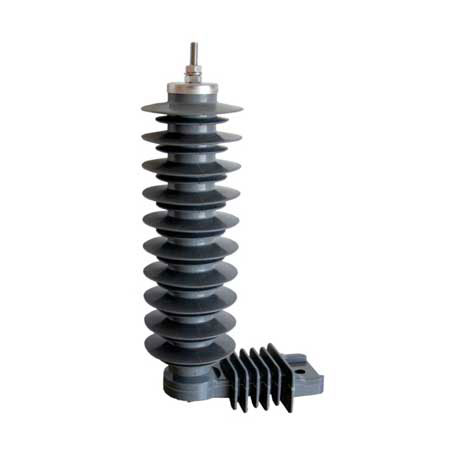
Electrical equipment does not always operate under perfectly steady voltage conditions. Lightning strikes, switching operations, and sudden disturbances on a power network can create voltage surges that last for a very short time but still cause serious damage. Transformers, cables, switchgear, motors, and other equipment can be affected if these surges are not controlled. A surge arrester is a protective device designed to limit these temporary overvoltages and divert surge current safely towards earth.
It normally remains at a high impedance during regular system operation, but responds when a surge raises the voltage beyond its intended operating range. The result is a lower voltage stress on the equipment being protected. Surge arresters are commonly used in power transmission and distribution systems, substations, industrial electrical networks, and other medium and high voltage applications. Their selection depends on factors such as system voltage, continuous operating voltage, discharge current, insulation level, and installation conditions.
Understanding Surge Arresters
A surge arrester is a device connected between the electrical system and earth to protect equipment from excessive transient voltages. When a lightning or switching surge travels through a power line, the arrester provides a path for the surge current to flow to ground.
Under normal operating conditions, the arrester allows only a small leakage current. When the voltage rises sharply, its electrical characteristics change and it conducts the surge current away from the protected equipment.
This basic operation is what makes surge arresters different from ordinary protective devices. They do not simply disconnect the circuit when a surge occurs. Instead, they limit the voltage and provide a controlled path for the unwanted surge energy.
The IEC 60099-4 standard covers metal-oxide surge arresters without gaps designed to limit voltage surges on AC power circuits above 1 kV.
How Does a Surge Arrester Work?
A typical modern surge arrester uses metal-oxide varistors, generally based on zinc oxide. Yamuna Power describes its surge arresters as gapless metal-oxide units using zinc-oxide varistors, an FRP core, and a silicone housing.
The working process is fairly straightforward. During normal operation, the arrester remains connected to the system but does not conduct significant surge current. Its resistance is high enough to keep current flow limited.
A lightning strike or switching event can suddenly increase the voltage. At this point, the zinc-oxide elements become highly conductive. The surge current is diverted through the arrester towards earth, limiting the voltage that reaches the protected equipment.
Once the surge passes, the arrester returns to its normal high-resistance state. The response happens very quickly. That matters because electrical surges can rise much faster than a person or conventional mechanical device could respond.
What are Surge Arresters Used For?
Surge arresters are installed to protect electrical insulation and equipment from transient overvoltages. Their use is particularly important in systems exposed to lightning or frequent switching operations.
Common applications include:
- Power transformers
- Distribution transformers
- Substations
- Overhead power lines
- Switchgear
- Medium voltage distribution systems
- Industrial electrical networks
- Power generation facilities
- Commercial electrical infrastructure
In a substation, for example, surge arresters may be installed near transformers or other critical equipment. The exact arrangement depends on the system design and the level of protection required.
A properly selected arrester does not eliminate the possibility of every electrical fault. Its job is more specific. It limits transient voltage to a level that the protected insulation and equipment can withstand.
Main Types of Surge Arresters
Surge arresters are commonly differentiated by their construction, application, and electrical duty.
Metal Oxide Surge Arresters
Metal oxide arresters are widely used in modern AC power systems. They use nonlinear zinc-oxide resistor elements and can operate without a spark gap.
IEC 60099-4 specifically covers metal-oxide surge arresters without gaps for AC systems above 1 kV.
Gapless construction also allows the arrester to respond directly to changes in voltage rather than waiting for a separate spark gap to break down.
Distribution and Station Class Arresters
The required arrester design depends on where it will be installed and what equipment it needs to protect.
Distribution applications generally involve protecting equipment on distribution networks, while station-class arresters are used in substations and other installations with higher protection and energy-handling requirements.
The correct class should be selected according to the network design, equipment insulation level, fault conditions, and applicable technical specifications.
Polymer Housed Surge Arresters
Modern arresters may use polymeric housings instead of traditional porcelain construction. Polymer housings can provide useful mechanical and environmental characteristics, depending on the design.
Yamuna Power's listed surge arresters use silicone housing along with an FRP core and zinc-oxide varistors.
Important Parameters to Check Before Selecting a Surge Arrester
A surge arrester should not be selected based only on the nominal system voltage. Several technical parameters need to match the electrical system.
System Voltage
Start with the nominal and highest system voltage. The arrester must be suitable for the voltage level of the network.
Yamuna Power lists surge arresters for 11 kV, 22 kV, and 33 kV applications. Its published technical data gives the highest system voltage values of 12 kV, 24 kV, and 36 kV, respectively.
Maximum Continuous Operating Voltage
Maximum continuous operating voltage, often referred to as MCOV, indicates the highest power-frequency voltage that the arrester is designed to withstand continuously under specified conditions.
It is an important selection parameter because the arrester remains connected to the system during normal operation.
Nominal Discharge Current
Nominal discharge current indicates the standard current impulse used to characterise the arrester's discharge performance.
Yamuna Power lists a 5 kA nominal discharge current for its 11 kV, 22 kV, and 33 kV surge arrester range. Other systems and specifications may require different ratings, so the manufacturer's technical data should always be checked rather than assuming one value suits every application.
Protection Level
The protection level indicates how effectively the arrester limits the voltage during a surge. Lower residual voltage generally means lower electrical stress on the protected insulation, but the arrester still needs to be correctly coordinated with the equipment's insulation withstand level.
Housing and Installation Conditions
Outdoor arresters face rain, sunlight, pollution, temperature changes, and moisture. Housing material, creepage distance, sealing, and mechanical construction therefore matter.
Installation arrangement matters too. Line connection, earthing, mounting structure, and lead length should follow the manufacturer's instructions and project specifications.
Why Surge Arrester Quality Matters
A surge arrester is normally installed as a protective device and may remain unnoticed for years. Its importance becomes obvious when a major surge occurs.
Poor-quality materials, unsuitable ratings, inadequate sealing, or incorrect installation can reduce protection when it is actually needed. The arrester must also withstand the electrical and environmental conditions of the site.
Technical specifications used by utilities commonly consider parameters such as residual voltage, discharge current, insulation withstand, housing requirements, and testing. Some specifications also require type and routine test documentation.
This is why buyers should look beyond the product name. Documentation and test data matter.
How to Choose Surge Arresters Manufacturers and Suppliers
When comparing surge arresters manufacturers, look beyond product availability. A manufacturer should be able to provide clear technical information for the required voltage class and application.
Check whether the manufacturer provides:
- Complete technical specifications
- Rated voltage and MCOV information
- Nominal discharge current
- Protection or residual voltage data
- Applicable standards
- Type and routine test documentation where required
- Housing and construction details
- Installation instructions
- Suitable accessories and mounting arrangements
The same applies when comparing surge arrester suppliers. A supplier should understand the application rather than simply quote a product based on the voltage number.
For example, an 11 kV system may require a different arrester selection from another 11 kV installation depending on earthing conditions, equipment insulation levels, fault conditions, and the required protection class.
A good supplier should ask these questions before recommending a product.
Surge Arresters and Lightning Protection
Lightning is a major source of transient overvoltage in electrical networks, but it is not the only one. Switching operations within the network can also generate voltage surges.
A surge arrester may remain in service for years without drawing attention until a major surge puts its protective function to the test. Yamuna Power describes its arresters as protecting transformer insulation and conductors from damaging effects caused by lightning and switching surges.
Surge arresters therefore form one part of a broader electrical protection strategy. They should be coordinated with earthing systems, insulation levels, equipment ratings, and other protection measures.
Why Correct Installation Is Important
Even a technically suitable surge arrester can perform poorly if it is installed incorrectly. The connection between the arrester and the protected equipment should be kept appropriate for the system design. Earthing must provide a suitable low-impedance path for surge current. Mounting and terminal connections also need to be secure.
Outdoor installations require particular attention to environmental exposure and clearances. Installation should always follow the manufacturer's instructions and the applicable project standards. Electrical protection is not an area where improvisation pays off.
Protect Your Power Network with Reliable Surge Arresters
Surge arresters provide an important layer of protection against temporary voltage surges in electrical networks. They respond to excessive voltage and divert surge current away from sensitive equipment.
The right arrester depends on the system, not just the voltage label. MCOV, discharge current, protection level, insulation coordination, housing, installation conditions, and applicable standards all deserve attention.
When evaluating surge arresters manufacturers, look for clear technical specifications, suitable ratings, and application guidance. Correct selection and installation can make a significant difference when a power system faces a lightning or switching surge.
