
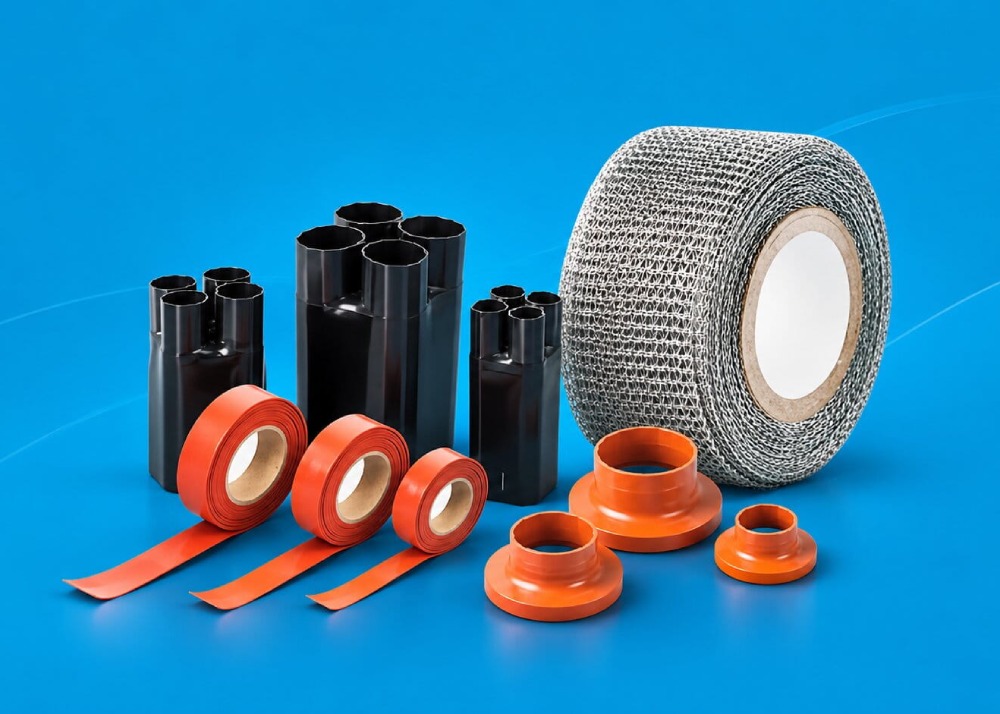
A power cable can be manufactured to exact specifications and still face problems at the points where it connects to other cables or electrical equipment. The reason is simple: the cable's original construction changes during installation. Its outer sheath, insulation and screening layers have to be prepared, joined or adapted to suit the connection.
Think about an underground cable entering a transformer. The cable needs a properly prepared termination. A section running through a distribution network may need a joint to connect two lengths. Elsewhere, exposed busbars, cable ends or individual cores may require additional insulation and protection.
Each of these situations calls for a different component. Together, these components form the range of Power Cable Accessories used across electrical distribution systems.
Understanding what each product does makes it easier to see why accessory selection deserves as much attention as cable selection itself.
The work begins where the cable construction changes
A power cable has several layers, each serving a particular purpose. The conductor carries current, the insulation separates it electrically from surrounding materials, and the screen, armour and outer sheath provide additional electrical or mechanical protection, depending on the cable design.
When a cable is cut or prepared for a connection, these layers cannot simply be left exposed. The connection must be completed, insulation restored and the protective arrangement adapted to the new configuration.
A cable joint, for example, must maintain electrical continuity between two conductors while rebuilding the insulation around the connection. A termination has a different job: it prepares the cable end for connection to equipment such as a transformer, switchgear or overhead line.
The distinction matters because the two products are designed around different installation requirements. Even within these categories, the cable type, voltage rating and operating environment can change the design of the accessory required.
Not every connection needs the same solution
Consider a distribution network with several kilometres of underground cabling. A single cable length may not cover the entire route, making joints necessary at suitable connection points.
Straight-through joints are used to connect compatible cable sections. Transition joints are required where the cable constructions differ, such as certain connections between XLPE-insulated and paper-insulated cables.
The jointing technology also varies. Heat-shrink systems use components that contract when heated, while cold-shrink systems use pre-expanded components that contract after their supporting core is removed. Pre-moulded systems use factory-formed insulating components fitted over the prepared cable.
None of these methods should be selected simply because one is more familiar to an installation team. Cable construction, voltage application, available working space and site conditions all influence the decision.
Terminations bring another set of considerations. A cable connected inside a switchgear enclosure does not face exactly the same conditions as one terminating outdoors. Outdoor installations may require additional attention to weather exposure, surface contamination and creepage distance. The number of cores and the arrangement of the equipment terminals also influence the termination design.
Yamuna Power's product range includes heat-shrinkable, cold-shrink and pre-moulded jointing and termination systems for different cable applications. This range is relevant to projects where the cable configuration and installation method need to be considered together.
The smaller components have their own jobs
Not every accessory is used to join or terminate a cable. Some are fitted to protect specific sections that would otherwise remain exposed.
Take cable end caps. During storage or transportation, an unfinished cable end can be exposed to moisture and dirt. A suitable end cap helps seal that opening until the cable is ready for installation.
Breakouts address a different situation. In a multi-core cable, the individual cores separate near the termination. A breakout provides insulation and protection around this branching point.
Heat-shrinkable tubing is another widely used category, although the different constructions are intended for different purposes. Medium-wall tubing is used for insulation and protection in suitable applications. Dual-wall tubing has an additional adhesive inner layer that helps provide sealing. Triple-wall products use multiple layers to meet particular insulation and protection requirements.
Then there are products designed for more specialised electrical conditions. Stress-control tubing helps manage electrical stress around selected cable termination areas, while anti-tracking tubing is designed to resist the formation of conductive tracking paths on insulating surfaces.
These differences are worth understanding before ordering. Two tubes may look similar in a catalogue but have very different material properties and intended applications.
Where transformers, switchgear and busbars come into the picture
Cable accessories are not limited to the cable route itself. Electrical equipment also has connection points that need suitable insulation and protection.
Busbars, for instance, distribute electrical power within switchgear and substations. Depending on their arrangement, exposed sections may require busbar insulation tubing or heat-shrinkable insulation tape.
Transformer and switchgear terminals can have straight or angled configurations. Straight boots and right-angle boots are designed for suitable terminal arrangements, providing insulation around the connection. The correct shape and dimensions depend on the actual equipment configuration.
Outdoor installations introduce another consideration. Anti-tracking rain sheds are used in suitable applications to increase creepage distance along insulated surfaces. Silicone conductor covers provide protective covering for specified overhead and conductor applications.
Yamuna Power's accessories range includes these products alongside cable repair sleeves, insulating wrap-around sleeves, copper braided strips and copper mesh tapes. Each serves a different purpose, so it is important to identify the electrical function required rather than treating all accessories as interchangeable insulation products.
The site conditions often decide what will work
A product that suits one project may be unsuitable for another, even when both installations use cables of a similar voltage rating.
For example, an underground cable joint has to be suitable for the cable construction and the conditions around the buried connection. An outdoor termination may need to withstand exposure to sunlight, rain and pollution. Inside an industrial facility, working space and the arrangement of electrical equipment can influence which jointing or termination technology is practical.
The installation method matters too. Heat-shrink products require suitable heating equipment and careful application. Cold-shrink systems avoid the same heating process but still require correct cable preparation and fitting. Pre-moulded products have their own dimensional and installation requirements.
This is why a project specification should be reviewed before the accessory is finalised.
Engineers and procurement teams should establish the cable insulation type, conductor material, cross-sectional area, number of cores, screen and armour arrangement, operating voltage and installation environment. They should also check the dimensions required for the connection and review the manufacturer's installation instructions.
Applicable test documentation matters as well. IEC 60502-4:2023 specifies type-testing requirements for certain accessories used with extruded-insulation power cables within its stated voltage scope. It does not cover every specialised cable application, so the relevant standard must be checked against the project specification.
Choosing a manufacturer is part of the decision
When evaluating Power Cable Accessories Manufacturers, buyers often begin with price and product availability. Both are relevant, but they do not tell the whole story.
The more useful questions concern product compatibility, manufacturing consistency, material specifications and technical support. Can the manufacturer provide the documentation needed for the project? Does its range cover the cable configurations being used? Can the technical team help clarify a product's intended application?
These questions become particularly important when a project involves several types of cables, joints, terminations and equipment connections.
Yamuna Power & Infrastructure Ltd., operating under the Yamuna Densons brand, has been manufacturing power cable jointing systems and related accessories since 1973. Its product portfolio includes heat-shrinkable and cold-shrink jointing systems, pre-moulded products, cable terminations, insulating tubing, end caps, breakouts and busbar insulation accessories.
The company's cable accessories range brings together products intended for different stages of electrical installation. For a project-specific requirement, sharing the cable specifications and intended application with its technical team is a more useful starting point than selecting a product from its name alone.
