
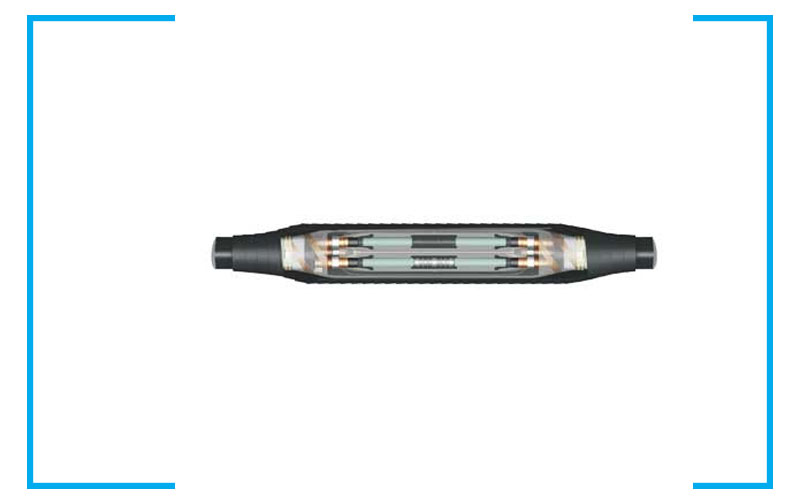
Power cables often run for long distances, and a continuous cable length is not always practical. At some point, two cable sections need to be connected securely. This is where cable joints come in. A poorly made joint can affect insulation, allow moisture to enter, or create electrical and mechanical problems over time. Cold shrinkable cable joints offer a practical way to connect and insulate power cables without using an external heat source.
They are used in underground networks, utility projects, industrial electrical systems, and other applications where cable sections need to be joined and insulated without external heat. Yamuna Power lists cold shrink jointing solutions for 11 kV, 22 kV, and 33 kV applications, including single and three-core cable configurations.
Understanding Cold Shrink Cable Joints
Cold shrink cable joints are cable jointing systems used to connect two cable sections while restoring electrical insulation and protecting the connection from external conditions.
The main component is generally a pre-expanded elastomer or rubber sleeve held in position by a removable support core. Once the prepared cable connection is placed correctly, the support core is removed. The sleeve then contracts around the cable and creates continuous radial pressure over the joint.
There is an important difference here from heat shrink technology. Cold shrink cable joints do not need a torch, flame, or external heating equipment during installation. The sleeve contracts around the prepared cable once the supporting core is removed. That makes the method particularly useful at sites where open flames are restricted or where working space is limited.
How Do Cold Shrink Cable Joints Work?
The installation process starts with proper preparation of the cable ends. The cable is stripped according to the joint manufacturer's specifications, and the conductor and insulation layers are prepared carefully.
The cable conductors are then connected using the specified joining method and components. After the electrical connection is completed, the cold shrink body is positioned over the joint area.
The removable core is pulled out gradually. As it comes out, the pre-stretched sleeve contracts around the cable. This produces close contact around the joint and helps maintain the required insulation and sealing.
The exact preparation, dimensions, stress control components, and installation sequence vary by cable type and voltage rating. The manufacturer's installation instructions should therefore be followed carefully.
Why Are Cold Shrink Cable Joints Used?
No External Heat Required
The main advantage is that the sleeve does not require an external heat source to contract. Installers do not need a blow torch or similar heating equipment to shrink the main sleeve. This can be useful in enclosed areas, restricted work zones, and locations where fire-related precautions make heat shrink installation less convenient.
Consistent Radial Pressure
The sleeve contracts around the cable after the support core is removed. This creates radial pressure around the joint rather than relying on manual shrinking with a heating tool. Yamuna Power's cold shrink technology is described as maintaining constant radial pressure.
Suitable for Restricted Work Areas
Cold shrink systems can be useful where access is limited or installation conditions make conventional heating less practical. The joint body can be positioned over the prepared connection without bringing heating equipment into the work area. Accurate cable preparation and adherence to the manufacturer's instructions are still essential.
Protection Against Environmental Conditions
Cable joints may be exposed to moisture, dust, temperature changes, UV exposure, and other site conditions depending on where they are installed. A properly selected and installed joint provides insulation and environmental protection around the connection.
This is particularly relevant for underground systems, where joints can face moisture and changing ground conditions.
Where Are Cold Shrink Cable Joints Used?
Cold shrink joints can be used in several electrical and infrastructure applications. Common examples include:
- Underground power distribution
- Industrial electrical networks
- Utility infrastructure
- Renewable energy installations
- Commercial and infrastructure projects
- Medium voltage cable systems
Yamuna Power's product range includes cold shrink cable joints for 11 kV, 22 kV, and 33 kV systems, with options for different cable configurations.
The actual joint should always be selected according to the cable construction, voltage class, conductor size, insulation type, and installation environment.
Cold Shrink Cable Joints vs Heat Shrink Joints
The basic purpose of both systems is similar: connect cable sections and restore insulation and protection around the joint. The installation method is where they differ.
Heat shrink joints use heat to make the tubing contract around the cable. Cold shrink systems use a pre-expanded sleeve that contracts when its support core is removed.
This difference can matter at a job site. A heat-based installation may require suitable heating equipment and additional fire-safety precautions. A cold shrink installation removes that particular requirement.
Neither method should be considered universally suitable for every cable system. Voltage, cable design, site conditions, standards, and installation requirements should guide the selection.
What Should You Check Before Selecting a Cold Shrink Joint?
Buying a joint simply because it matches the voltage is not enough. Several technical details should be checked.
Voltage rating: Make sure the joint is designed for the operating voltage of the cable system.
Cable construction: Check whether the joint is compatible with the cable's insulation, number of cores, conductor size, and overall construction.
Installation environment: Underground, outdoor, industrial, and enclosed installations may have different environmental requirements.
Standards and testing: Check the relevant product standards and technical documentation. Yamuna Power states that its cold shrink products comply with specifications including IEC 60502-4 and IS 13573.
Installation instructions: Correct cable preparation and installation are essential. An otherwise suitable joint can still perform poorly if it is installed incorrectly.
Why Quality Matters in Cable Jointing
A cable joint sits directly within the power path. It has to maintain electrical continuity while also restoring insulation and protecting the connection.
Poor cable preparation, incorrect joint selection, inadequate sealing, or unsuitable materials can create problems later. Environmental exposure can make the situation worse. Manufacturer guidance and compatible jointing components therefore matter just as much as the joint itself.
Yamuna Power & Infrastructure Ltd. manufactures and supplies cable jointing accessories for power transmission and distribution applications. Its cold shrink range covers 11 kV, 22 kV, and 33 kV applications, alongside other cable jointing technologies.
Choosing Cold Shrinkable Cable Joints for a Project
The right joint depends on the cable and the site, not simply on the name of the technology. Project teams should review voltage requirements, cable dimensions, insulation type, number of cores, environmental exposure, and applicable standards before ordering.
Cold shrink technology can be a practical option where heat-free installation, controlled contraction, and environmental protection are important. Proper selection and installation remain the foundation of reliable performance.
