
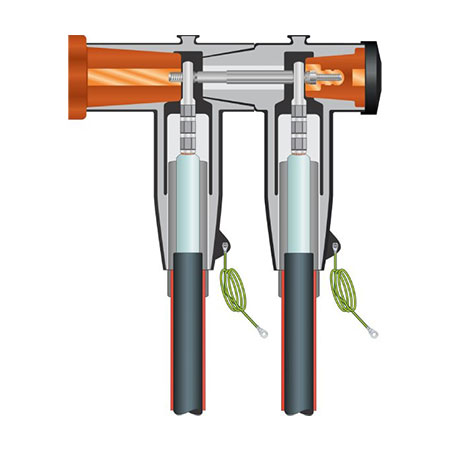
In an industrial power distribution system, even a small connection needs to be dependable. Cable joints, terminations and connectors all play a part in keeping electricity flowing safely between equipment. When working with medium-voltage networks, selecting the right elbow connectors is particularly important because the connection must match the cable, switchgear and electrical load.
Elbow cable connectors are used to connect underground power cables to equipment such as transformers, ring main units (RMUs) and switchgear. Their compact, angled design makes them useful in installations where space is limited or cables need to enter equipment from a particular direction.
Price is only one part of the decision. The connector must match the system voltage, rated current, cable dimensions and switchgear interface. Installation requirements also deserve attention, particularly in projects where several cable connections need to fit within a limited space.
What Are Elbow Cable Connectors?
An elbow cable connector is an insulated electrical accessory designed to connect a power cable to compatible equipment through an angled interface. In medium-voltage installations, premoulded and screened separable connectors are commonly used for connections to switchgear, transformers and RMUs fitted with suitable bushings.
The elbow shape helps organise cable connections in confined spaces. Depending on the design, the connector may also provide electrical insulation, stress control and a screened outer surface.
These features matter in industrial environments. A poorly matched connector can create installation difficulties, compromise insulation performance or lead to overheating and electrical faults. The connector must therefore be selected according to the equipment's specifications rather than its appearance alone.
Yamuna Power offers premoulded elbow connectors in different current ratings, including 250 A, 400 A and 630 A options for suitable medium-voltage applications. Its published product range includes shielded connectors rated for systems up to 24 kV.
Why Elbow Connectors Matter in Industrial Projects
Industrial facilities often have several distribution points, transformers, switchgear panels and underground cable routes. Each connection must fit the electrical design and the physical arrangement of the installation.
Elbow cable connectors offer several practical advantages when correctly selected and installed.
1. Efficient Use of Installation Space
Industrial switchgear rooms and transformer enclosures can have limited space for cable routing. An angled connector helps position the cable neatly at the equipment interface and may make cable arrangements easier to manage.
The actual clearance required depends on the connector design, cable size and equipment layout. Installation drawings should be checked before ordering.
2. Insulation and Electrical Stress Control
Medium-voltage connections require insulation that can withstand the electrical stress created during normal operation. Connector designs with built-in stress control help manage the electric field around the cable termination.
The insulation system, cable interface and equipment bushing must all be compatible. A connector should never be selected solely because its voltage rating appears suitable.
3. Screened Construction
Many medium-voltage elbow connectors have a conductive outer screen designed to control the electrical field and provide a defined external surface. Some designs are described as safe to touch when correctly installed and connected to the specified earthing system.
That does not mean every connector can be handled while energised. Safe access depends on the connector design, installation, earthing and operating procedures. Electrical isolation and approved safety practices remain essential.
4. Easier Connection and Maintenance
Premoulded connectors are manufactured to a defined shape and specification. This can simplify installation when the cable dimensions and equipment interface match the product requirements.
Some separable designs can also be disconnected for maintenance when the system has been properly isolated and the manufacturer's procedure is followed. The ability to separate a connector should not be confused with permission to disconnect it under load.
5 Things to Check When Choosing Elbow Connector Manufacturers
A manufacturer's product range is only one part of the decision. Industrial buyers should compare the specifications and documentation against the actual requirements of the project.
1. Voltage Rating and Current Capacity
Start with the system voltage and the connector's rated current. These two specifications determine whether the product is suitable for the intended electrical duty.
For example, Yamuna Power lists elbow connector options in 250 A, 400 A and 630 A ratings for relevant medium-voltage applications. Its product range includes 24 kV connectors, along with separate product configurations for other voltage classes.
Do not assume that all models share the same ratings. Confirm the exact product code, rated voltage and current capacity before placing an order.
2. Cable Size and Insulation Compatibility
The connector must fit the cable's conductor cross-section and insulation dimensions. Cable construction also matters. Medium-voltage connectors are designed for specific cable types, such as cross-linked polyethylene (XLPE) or ethylene propylene rubber (EPR), depending on the product.
Yamuna Power's published description for its shielded elbow connector range identifies underground cable sizes from 25 mm² to 400 mm². The usable range for an individual model must still be confirmed against its technical data.
Check the cable's outer diameter, insulation diameter, conductor material and lug requirements. A mismatch can complicate installation and affect the quality of the connection.
3. Insulation Material and Build Quality
The insulation material has a direct bearing on the connector's electrical and mechanical performance. Yamuna Power describes its 24 kV shielded connectors as being moulded from peroxide-cured EPDM insulation.
EPDM is used in electrical accessories because of its insulating and environmental properties. However, material alone does not establish whether a connector is suitable for a particular installation. The complete design, manufacturing quality and test results matter too.
Ask manufacturers for technical data sheets and relevant test documentation. These should correspond to the exact connector model being supplied.
4. Applicable Standards and Testing
Industrial projects often specify particular standards for cable accessories. Buyers should check the standards and test requirements relevant to the connector's voltage class, design and intended application.
Yamuna Power's published information refers to DIN 47636 for its shielded elbow connector range, while its product information also identifies IEC 60502-4 for specified connector products.
Confirm the scope of compliance for the exact model rather than assuming that a standard mentioned on a general product page applies to every item in the range. Where a project specification requires particular tests or certificates, obtain and review the corresponding documentation before approval.
5. Installation Guidance and Technical Support
Even a well-made connector can perform poorly if it is installed incorrectly. Cable preparation, lug selection, interface cleanliness, tightening requirements and stress-control arrangements all affect the finished connection.
Before choosing a manufacturer, ask what installation instructions and technical support are available. Confirm whether the product requires specific tools, approved cable lugs or trained installation personnel.
Clear documentation is especially useful for projects involving several cable terminations or multiple installation teams. It helps maintain consistency across the site.
Where Are Elbow Cable Connectors Used?
Elbow connectors are commonly used in medium-voltage distribution systems where underground cables connect to compatible electrical equipment.
Typical applications include:
- Industrial plants: Connecting power cables to switchgear and distribution equipment serving production areas.
- Electrical substations: Providing cable interfaces for compatible medium-voltage equipment.
- Ring main units: Connecting underground distribution cables to RMUs fitted with the appropriate bushings.
- Transformer installations: Terminating cables at compatible transformer interfaces.
- Commercial and infrastructure projects: Supporting power distribution in facilities that use suitable medium-voltage switchgear.
The connector design must suit the equipment interface and the installation conditions. An accessory intended for one bushing type or voltage class may not be suitable for another.
Why Work With Established Elbow Connector Manufacturers?
For industrial buyers, a manufacturer's ability to provide clear technical information matters as much as the product range. Product specifications should allow engineers to check whether a connector is suitable for the cable, equipment interface and operating conditions.
Before approving a manufacturer, ask for:
- Product-specific voltage and current ratings.
- Compatible cable dimensions and bushing details.
- Technical drawings and installation instructions.
- Applicable standards and test reports.
- Material specifications and handling guidance.
Yamuna Power offers premoulded elbow connectors in 250 A, 400 A and 630 A configurations. Its published product information describes shielded options using peroxide-cured EPDM insulation for compatible underground cable connections.
These details provide a starting point for evaluation. Final approval should depend on the documentation for the specific model and its suitability for the intended installation.
Common Mistakes to Avoid When Buying Elbow Cable Connectors
A few checks before ordering can prevent compatibility issues and installation delays.
Choosing by current rating alone: Current capacity is only one factor. Voltage class, bushing type and cable dimensions must also match.
Ignoring insulation dimensions: Cables with the same conductor cross-section can have different insulation diameters. Check the manufacturer's sizing information before selecting a connector.
Overlooking test documentation: Request the applicable test reports or certificates required by the project instead of relying only on a general product description.
Assuming connectors are interchangeable: Elbow, straight and T-connectors have different connection arrangements. Confirm which design suits the equipment interface.
Leaving installation requirements until later: Cable preparation, lug selection and assembly procedures should be checked before work begins. Follow the manufacturer's instructions and the site's electrical safety procedures.
Resolving these details during procurement is easier than dealing with a mismatch after delivery.
Top 3 Elbow Cable Connectors from Yamuna Power
Yamuna Power lists several elbow connector configurations for medium-voltage installations. The three options below differ in their rated current or voltage class, so the choice depends on the electrical system and compatible equipment.
1. 24 kV, 250 A Screened Separable Elbow Connector
This model is listed for a rated current of 250 A and a voltage rating of 24 kV. It may be considered when both ratings meet the project's requirements and the connector matches the cable and equipment interface.
2. 24 kV, 630 A DSCS Screened Separable Connector
With a listed current rating of 630 A and a 24 kV voltage rating, this option is intended for applications requiring the corresponding electrical ratings. Check the product documentation for its exact configuration and compatibility requirements.
3. 15 kV, 630 A DSCS Screened Separable Connector
This configuration is listed with a rated current of 630 A, a 15 kV rating and a 17.5 kV system voltage. Verify these ratings against the project's electrical design before considering it for installation.
For all three options, confirm the product code, cable dimensions, bushing type and installation instructions before placing an order.
Choosing the Right Elbow Cable Connectors for Your Project
Selecting an elbow connector starts with the electrical system, but the cable and equipment interface matter just as much. A suitable product must meet the required voltage and current ratings, fit the cable dimensions and comply with the project's technical specifications.
When comparing elbow connector manufacturers, look beyond the catalogue and review the documentation for the exact model. Yamuna Power's product range provides options for different medium-voltage requirements, but the final selection should always be based on verified specifications and compatibility with the installation.
